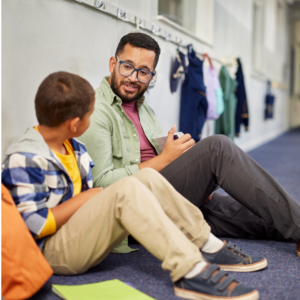

Loneliness is a challenging feeling for anyone to navigate, let alone an adolescent who is still developing cognitively and growing into their identity. And yet, according to the research, teens are among the loneliest people on the planet.
Loneliness, Explained
 Loneliness is a widespread phenomenon that seems to be getting worse. In 2025, the World Health Organization (WHO) Commission on Social Connection released a global report revealing that 1 in 6 people worldwide is affected by loneliness, with significant consequences on well-being.
Loneliness can be categorized as the distress that arises from a gap between the social connection we want and the connections we actually have. Research often distinguishes between three types of loneliness: emotional (lack of intimate relationships), social (an insufficient social network) and existential (feeling disconnected from meaning and/or society).
This distinction helps explain why we can get a nagging sense of being lonely even in a crowd of people, or can feel perfectly content in our own company. Understanding which kind of loneliness your teenager is experiencing is the first step towards addressing it.
When we feel lonely, there is a tendency to ruminate and get caught up in negative thought patterns that in turn influence behaviour, especially in social settings, further driving isolation. And it isn’t just psychological – the experience of loneliness triggers a physical stress response in the body, which has wide-reaching impacts on our health.
3 Pillars of Health: Physical, Mental & Social
 Over the past decade, the health implications of social isolation and loneliness have received global attention, with an often-quoted study that showed social disconnection is as detrimental to our health as smoking 15 cigarettes a day (Smith, Holt-Lunstad & Layton, 2010)
On the physical side, effects of chronic loneliness include a weakened immune system, cognitive decline, high blood pressure, increased risk of stroke and cardiovascular disease. On the mental side, loneliness has a clear bidirectional relationship with depression and is linked to anxiety, panic attacks and suicidal ideation (Verity, Burke & Qualter, 2025).
These effects are especially urgent when you look at the statistics and understand that young people are the most at risk.
The Kids Are Lonely
 Adolescence, marked by rapid identity, cognitive, and relational change, is a period of heightened vulnerability to loneliness, in part due to the inherently destabilizing transitions teenagers go through. Among the 5.5 million Canadian school-aged children, roughly 1 in 4 teenagers report often feeling lonely, and rates among adolescents have been rising steadily (Falkenberg & Heringer, 2024).
Loneliness at school is widespread and increasing, with effects showing up as early as grade 1 (World Health Organization, 2025). Young people often self-report a deep sense of detachment and dislocation; despite being the most digitally connected generation, they are also the loneliest demographic.
Research also shows that loneliness is unevenly distributed in Canada: girls report more loneliness than boys, while LGBTQ2S+, Indigenous, Black, and disabled students, along with refugees/newcomers and racialized youth, face disproportionate bullying, discrimination, and exclusion that undermine their sense of belonging (Falkenberg & Heringer, 2024).
And It Seems to be Getting Worse
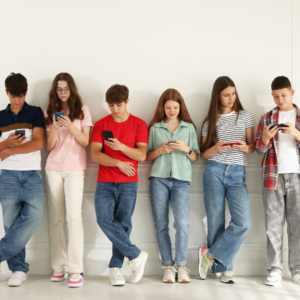 There is no single cause for why this is happening, but several compounding forces help explain why loneliness among young people continues to rise.
Online vs Offline
In-person interactions matter. Digital connection has value and holds a legitimate place in teen social life, but it is not a replacement for face-to-face contact. Technology is a double-edged sword: social media can worsen loneliness through comparison and cyberbullying, while at the same time providing platforms for connection that some teens wouldn’t have had otherwise. The trouble is many teenagers seem to be hanging out online rather than offline. The result is a strange phenomenon of isolation, having thousands of friends online but still feeling fundamentally alone.
Bullying Behaviour
One of the most direct mechanisms behind adolescent loneliness is tied to bullying. Teens who are bullied are more likely to withdraw; teens who are isolated are perceived as easier targets, making them more likely to be bullied again, driving a cycle of isolation.
Residual COVID Concerns
The pandemic hit adolescents at a pivotal development stage, right as they were building social skills and developing peer networks. The prolonged isolation and disruption of real-world interaction left a generational gap in basic social skills that is still being studied today.
Global Anxiety
 Modern teenagers are living through an unprecedented period of uncertainty, from climate change and economic instability to mass violence and ongoing war, all arriving in a constant barrage. This backdrop of global anxiety adds to a sense of disconnection and insecurity.
Strategies for Intervention & Connection
To combat this epidemic and reduce loneliness and social isolation among youth, it will take a combination of parental, educational and systemic shifts.
Here’s How Parents and Caretakers Can Help
- Model healthy habits by establishing technology-free times, prioritizing meaningful time together and initiating face-to-face exchanges.
- Stay informed about your teens’ social media usage and talk with them about its effects on their mental health, so you can build healthier digital habits together.
- Scaffold social skills by teaching them about active listening, emotional regulation, empathy and how to manage social anxiety and resolve conflict.
- Encourage prosocial behaviour by supporting your teens’ extracurricular activities and social plans outside of school.
- Become a safe space for your kids to talk about bullying by learning how it works and opening conversations with activities like this anti-bullying quiz.
- Benefit from available resources that revolve around youth mental health, like our Student Mental Health Toolkit, and explore our Resources for Parents, Guardians, and Caregivers, which offer guidance to caregivers who are concerned about their youth’s mental health.
Here’s How Teachers and Education Professionals Can Help
- Foster a healthy classroom that promotes acceptance and compassion with lesson plans and activities geared towards improving mental health awareness and encouraging an inclusive classroom environment.
- Enforce a zero-tolerance policy towards bullying; our Student Mental Health Toolkit has specific anti-bullying lesson plans and resources to support this.
- Help reduce stigma around mental health and loneliness by bringing in presenters who can share their story, such as these Stigma-Free Presentations.
- Establish peer groups and clubs and other dedicated spaces where young people can connect with their peers and support each other, using our specialized framework.
And, For Everyone Else
 Systemic change comes from working to destigmatize and reduce shame around loneliness, for ourselves and our young people. This starts by dismantling damaging beliefs like “if you’re alone, something is wrong with you.” Loneliness isn’t equivalent to being alone, and being alone isn’t necessarily unhealthy. By understanding this nuance and reframing occasionally being alone as something positive, and even good for us, we can help shift the paradigm.
Societal change also comes by investing in “third places,” where young people can spend time that is not home, nor school. Shifting resources and continuing to prioritize community infrastructure can go a long way towards organically fostering connection.
Ultimately, students (and humans) are social beings, seeking to feel connected and belong. The good news is that belonging is buildable, especially when the adults around are present and willing to enable it.
Author: Kristine Mitchell
Sources
Falkenberg, T., & Heringer, R. (2024). Loneliness and belonging in Canadian schools: A knowledge synthesis study. In Education, 29(2)
Smith, T. B., Holt-Lunstad, J., & Layton, J. B. (2010). Social relationships and mortality risk: a meta-analytic review.
Verity, L., Burke, L., & Qualter, P. (2025). Loneliness in adolescence: prevalence, developmental contexts, and interventions. Frontiers in Psychiatry, 16, 1696981.
World Health Organization. (2025). From loneliness to social connection: Charting a path to healthier societies – Report of the WHO Commission on Social Connection.