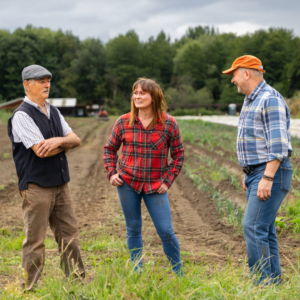
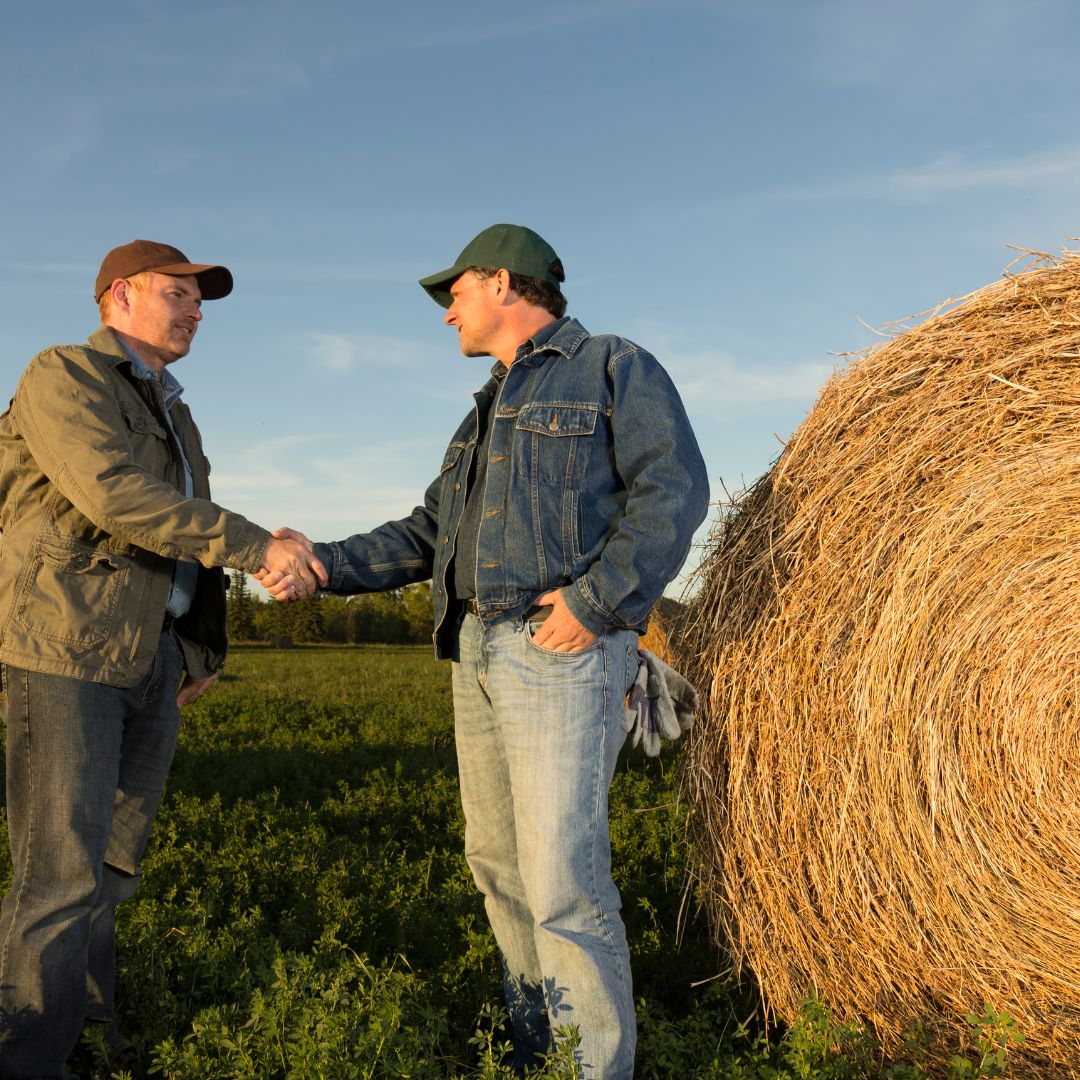
Farming is a career that doesn’t come with days off. Crops need harvesting, animals need feeding, and the work doesn’t stop when you’re not feeling well. It is a job with a complex combination of pressures that are often overlooked. This article examines the challenges and stressors of this industry and shares resources and support networks for these vital members of our society.
Current Landscape
 A healthy country needs healthy farmers. Yet this vocation is widely regarded as one of the most stressful, both physically and mentally (Mental Health Commission of Canada, 2022). In a national survey, 57% of Canadian farmers were classified as possible cases of anxiety and 34% depression, with nearly two-thirds (61.9%) experiencing psychological distress and showing scores of stress, anxiety and depression higher than the norm and resilience rated lower (Jones-Bitton et al., 2020).
The pressures behind these numbers can add up. It is an occupation with “an incredible amount of stress before you even put a shovel in the ground” (Thompson et al., 2023). In another research survey more than half of farmers reported high stress from workload, government regulations, unpredictability, financial strain and uncertainty about the future; the same research shows that farmers score more severely on mental health outcomes than the general population (Thompson et al., 2023).
Challenges Facing Rural Communities
To understand the crisis among Canadian farmers, one must first understand the multitude of chronic and episodic stressors of agricultural life.
Financial Pressures & Economic Uncertainty
 Farmers are uniquely impacted by market volatility, which makes their income unpredictable. Between fuel, fertilizer, equipment and land, they also have incredibly high operating costs that squeeze profit margins. On top of this, many farmers carry high debt and face insurance gaps that may not cover lean years of farming, creating significant financial liability in this sector.
Climate Change & Environmental Uncertainty
Farming means being constantly confronted by factors beyond one’s control. Increasingly frequent extreme weather events, like flooding, wildfires, droughts and disease transmission, directly threaten livelihood, with long-term climate projections creating anxiety and added strain that can develop into chronic stress.
Workload & Lifestyle Demands
Farmers put in long hours of physically and psychologically demanding work, which can lead to exhaustion and burnout. It is often seen as an occupation that doesn’t allow for ‘time-off’ as livestock and crops require constant attention and responsibility.
Structural & Systemic
There are also issues at a collective level including an aging farmer population, and access and affordability issues as land prices soar. As well, farming is often an intergenerational affair which comes with its own emotional strain and pressure.
Isolation & Stigma
Over 80% of Canadian farm operators live in rural and remote regions, areas that categorically have lower and more limited access to mental health support and internet connectivity. Limited access to mental health supports is compounded by long-standing norms and stereotypes within agricultural communities, including pressure to remain strong and not show vulnerability. Stigma, loneliness, and isolation can make it even harder to reach out for help when it is needed.
What Can Be Done
 This may seem rather daunting, but the first step of change is acknowledging the impact of mental health issues, followed by envisioning strategies to shift perception such as:
Improving access to mental health services: immediate and long-term solutions that bring accessible mental health services to agricultural communities, and the integration of mental health into agricultural extension services.
Providing financial assistance: coverage of mental health services for rural residents and subsidies for farmers facing financial hardship can make accessing support less prohibitive in a field already stretched thin financially.
Fostering community building and peer systems: farmer-to-farmer and face-to-face support has proven to be an effective intervention, so this includes supporting cooperatives that bring farmers together, investing in community centers, and creating online communities for geographically isolated farmers.
Advocating for policy reform: mental health aid needs to be an integral part of agricultural policy and rural development, including but not limited to: suicide prevention strategies, rural development funding that includes mental health infrastructure, education and training for rural healthcare providers and workplace safety standards that make mental health a component of farm safety.
Normalizing conversations about mental health: one of the most powerful tools for breaking stigma is hearing shared experiences of struggles and recovery.
Resources & Support Programs
 As part of a national strategy, services and systems specialized to farmers’ mental health need to be developed. Fortunately, a growing movement of organizations and individuals are helping shift the narrative.
At the Stigma-Free Mental Health Society, we offer a suite of resources tailored to agricultural and rural residents as part of our Rural Minds Matter Program, such as the Rural Mental Wellness Toolkit, a resource hub that includes inspiring stories, educational materials, videos, and other media to enhance peer groups and the wider community’s well-being.
We also strongly believe in the power of peer support and have developed an entire initiative dedicated to training rural residents to support their peers. If this sounds appealing, you can check out how to start a Rural Peer Support Group in Your Community: A Step-By-Step Guide, which offers guidance on promoting and funding your group, determining the needs of your community, mitigating risk, and more. We have additional information available about Mobilizing Rural Peer Support Groups in Canada, including tips for overcoming barriers to implementing peer support programs in rural communities.
Visit our podcast and blog where you will find thought-provoking conversations with farmers, rural residents and mental health advocates, who share informative material to bolster your well-being.
Other Organizations to Spotlight
We believe in working together to address this crisis and would like to highlight some other organizations doing amazing work for Canadian farmers.
- Do More Agricultural Foundation – Canada’s first mental health organization dedicated to farmers, with plentiful programs, workshops and resources.
- Canadian Centre for Agricultural Wellbeing – A support structure for farmers researching and designing farmer-informed programs about mental health in agriculture.
- National Farmer Wellness Network – A network connecting provincial farmer mental health programs.
- Canadian Agricultural Safety Association – Offering farm safety focused resources with a mental health hub.
- Farm Management Canada – Supporting sustainable farm management practices.
- Manitoba Farmer Wellness – Offers free counselling sessions with agriculture-trained professionals.
- Porch Light Society – A community-based organization providing resources and breaking stigma around mental health for rural residents.
- Farm Credit Canada – Provides comprehensive financial support for farmers and their families.
Crisis Hotlines
● National Farmer Crisis Network: 1-866-327-6701 (1-866-FARMS01)
● Crisis Services Canada – Call 833-456-4566
Choosing Health
The weight of the land on the shoulders of Canadian farmers is real. Weather, debt, fluctuating markets, stigma and isolation – the list goes on with stressors associated with this essential industry. Farmers are facing a mental health crisis because of the pressures of the entire system, not due to personal failings.
Changing our understanding of the issues requires acknowledging the reality of farmer mental health in our country, breaking the stigma that prevents people from seeking help, and fundamentally restructuring how we support our rural communities and agricultural workers.
Author: Kristine Mitchell
Sources
Jones-Bitton, A., Best, C., MacTavish, J., Fleming, S., & Hoy, S. (2020). Stress, anxiety, depression, and resilience in Canadian farmers. Social psychiatry and psychiatric epidemiology, 55(2), 229-236.
Mental Health Commission of Canada. (2022, March 30). Agriculture and Suicide Fact Sheet.
Thompson, R., Hagen, B. N., Lumley, M. N., Winder, C. B., Gohar, B., & Jones-Bitton, A. (2023). “An incredible amount of stress before you even put a shovel in the ground”: A mixed-methods analysis of farming stressors in Canada. Sustainability, 15(8), 6336. https://doi.org/10.3390/su15086336